Best Low-Cost Mods Before Your First Event
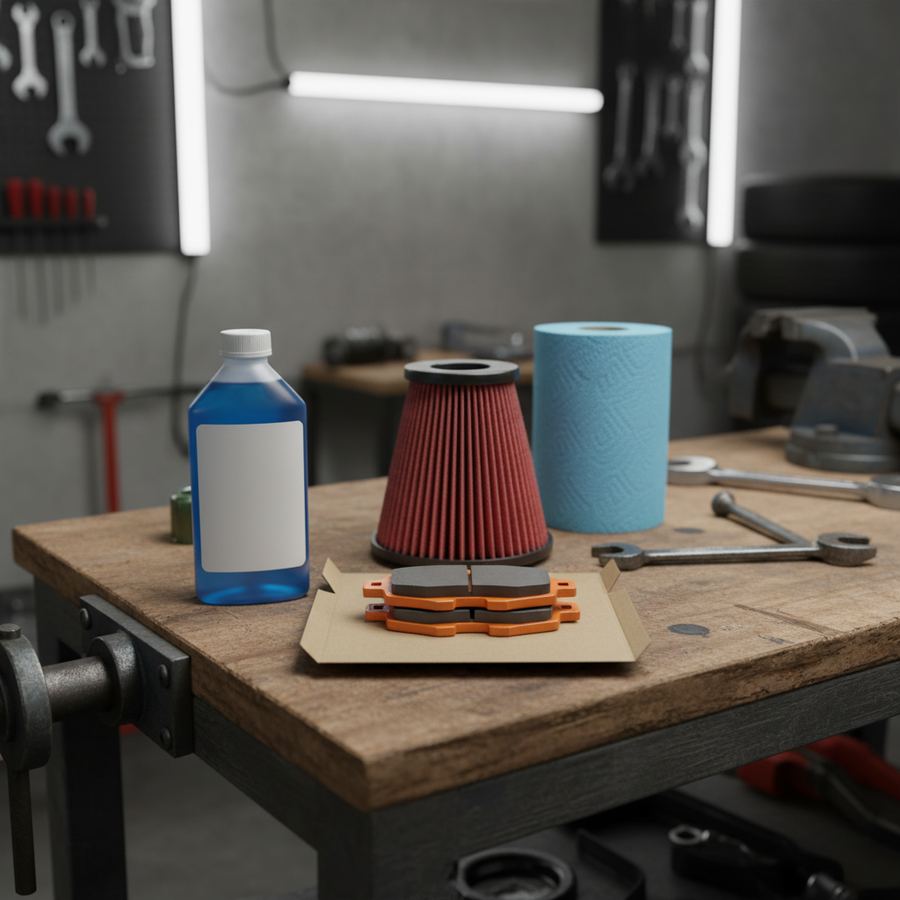
You have decided to run your first autocross or track day. The date is on the calendar, and now you are staring at a parts catalog wondering what to buy. The temptation to throw money at the car is real. Resist most of it. The modifications that actually make you faster at a grassroots event are boring, practical, and cheap.
Mods That Actually Help
Better Brake Pads
Stock brake pads are engineered for quiet operation, low dust, and smooth engagement. At an event, you want pads that bite harder and handle heat better. A set of upgraded street-performance pads costs $80 to $150 and changes the car immediately.
For autocross, something like Hawk HPS, StopTech Street Performance, or EBC Yellowstuff gives you better initial bite and more consistent pedal feel through a day of runs. For HPDE track days, step up to pads rated for higher temperatures like Hawk HP Plus or EBC Redstuff. Better pads teach you to brake later and harder, which is one of the fastest ways to drop time. This is the single best dollar-per-second modification for a beginner.
Fresh Brake Fluid
Old brake fluid absorbs moisture, which lowers the boiling point. When the fluid boils under hard braking, you get vapor in the lines and the pedal goes soft. This happens regularly to people who skip this step. A complete flush with fresh DOT 4 costs $15 to $30 if you do it yourself. For track days, a high-temp DOT 4 like ATE Typ 200 or Motul RBF 600 is worth the extra few dollars. Your braking system needs to be solid before anything else matters.
Good Tires
Tires are the single biggest performance variable. Nothing else changes your times as much as the right rubber. You do not need expensive R-compound semi-slicks for your first event. You do need tires with adequate tread, appropriate compound, and correct pressures.
If your current tires are decent with good tread remaining, run them first. Learn where you are losing time, then make an informed tire decision. If your tires are old, bald, or rock-hard, replace them. A set of 200 to 300 treadwear summer tires is the highest-return performance purchase you can make. For your first event, tire pressure setup matters as much as the tire itself. Start 3 to 5 PSI below your door sticker cold pressure and adjust from there.
Remove Unnecessary Weight
Every pound the car carries is a pound the brakes have to slow down, the tires have to grip, and the engine has to accelerate. Before your event, take out everything that is not bolted down. Spare tire, jack, floor mats, cargo net, subwoofer box, gym bag: all out. Most cars lose 40 to 80 pounds this way. The car will feel lighter through transitions and the brakes will last longer.
Do not strip the interior. Removing trim panels, seats, or sound deadening is not worth it for a daily driver. The gains are marginal compared to the hassle of a stripped cabin five days a week.
Fresh Oil and Coolant
Performance driving puts more thermal stress on your engine than commuting. If your oil change is due soon, do it before the event. If your coolant is overdue, flush it. Use the weight and grade your manufacturer specifies. Do not switch to heavier oil thinking it protects better at high RPM. Modern engines are engineered around specific weights, and going heavier usually means worse flow and less protection where it counts.
Mods That Do Not Help
Cold Air Intakes
The most popular first mod in the enthusiast world and one of the least useful for events. On a naturally aspirated car, a cold air intake adds maybe 5 to 10 horsepower at peak RPM. In a parking lot autocross where you spend your time between 3,000 and 6,000 RPM in second and third gear, that peak number is irrelevant. On a turbocharged car, an intake can actually hurt if it pulls warmer underhood air or confuses the mass airflow sensor. Save the $200 to $300 and put it toward brake pads.
Exhaust Tips and Axleback Exhausts
An axleback exhaust makes noise. It does not make power. On a stock car with a stock header and catalytic converter, changing the muffler does not alter exhaust flow enough to matter. A full catback can pick up meaningful power on some platforms, but that is a $500 to $1,500 investment that belongs much further down the priority list than tires, brakes, and fluids. Sound is not speed.
Cosmetic Modifications
Stickers, non-functional splitters, bolt-on wings with no actual downforce at autocross speeds, colored lug nuts: zero seconds gained. Spend that money on brake pads or save it for a dedicated set of event wheels. The one worthwhile item: magnetic car numbers for autocross. They cost $10 to $20 and make registration faster.
Suspension Before Skill
Coilovers and sway bars are legitimate performance parts. But if you have never run an event, upgrading suspension is premature. You do not yet know what the car needs because you do not yet know how to drive it at the limit. Stock suspension on most modern sport-oriented cars is surprisingly capable. Drive stock for a few events, learn the car's behavior, then make changes based on what you experience rather than what a forum told you to buy.
The Right Order
First: Brake fluid flush and pad upgrade. $100 to $180 DIY. Confidence and consistency under braking.
Second: Tires. Confirm your current set is good or budget for replacements. Biggest single variable.
Third: Weight removal. Free. Twenty minutes. Helps everything.
Fourth: Fresh oil and coolant. Standard maintenance cost. Protects the car under hard use.
That covers it. Show up, learn the car, and figure out upgrades after you have real seat time. For a full walkthrough of what else to check, see our prep checklist. And if you want to make sure nothing is lurking underneath, a pre-event inspection catches problems before they become failures.